

B-39/1, Nirala Nagar Opp Vivekanand Hospital Lucknow

Mon - Sat 10 AM – 8.30 PM

Best Glaucoma Treatment in Lucknow focuses on controlling eye pressure, protecting the optic nerve, and reducing the risk of further vision loss. This lifelong eye condition requires regular monitoring and appropriate treatment to help slow its progression. Although controlling eye pressure can reduce the risk of optic nerve damage, some patients may continue to experience changes over time. For this reason, routine follow-up appointments are important for checking eye pressure, assessing optic nerve health, and adjusting treatment when necessary.
At Klarity Eye Care Hospital, comprehensive glaucoma treatment and glaucoma eye care in Lucknow may include detailed eye examinations, prescription medications, laser procedures, and glaucoma surgery when required. Your ophthalmologist will recommend an appropriate treatment approach based on the type and stage of glaucoma, eye pressure, optic nerve condition, visual field results, and individual needs.
Fortunately, early diagnosis and timely treatment can help slow glaucoma progression. Regular monitoring also allows your ophthalmologist to identify changes early and provide appropriate care to help preserve useful vision.
Glaucoma refers to a group of eye diseases that can damage the optic nerve, which carries visual information from the eye to the brain. Increased intraocular pressure (IOP) is an important risk factor for optic nerve damage. However, glaucoma can also develop when eye pressure remains within the normal range.
Inside a healthy eye, a clear fluid called aqueous humor continuously circulates and drains through the eye’s drainage system. When drainage becomes impaired, fluid can accumulate and increase pressure inside the eye. Over time, this pressure and other factors can damage the optic nerve and gradually affect vision.
Unlike cataracts, vision loss caused by glaucoma cannot generally be restored. Consequently, early detection and appropriate treatment are essential for protecting the remaining vision.
Early glaucoma often develops without noticeable symptoms. As the disease progresses, however, changes in vision may become more apparent. Depending on the type and severity, possible symptoms include:
Because glaucoma can remain symptom-free for many years, regular comprehensive eye examinations are important, particularly for people with known risk factors. In addition, anyone experiencing sudden eye pain, redness, blurred vision, or severe headache should seek prompt evaluation from an eye-care professional.
Identifying the type of glaucoma is important because treatment varies by condition.
Glaucoma may not cause noticeable symptoms during its early stages. As the condition progresses, patients may gradually develop changes in their peripheral vision. In more advanced cases, tunnel vision and other visual disturbances can occur.
Possible warning signs include:
Because symptoms may remain absent for years, regular comprehensive eye examinations are important for people who have risk factors for glaucoma. Furthermore, sudden eye pain, redness, blurred vision, headache, or nausea may indicate an acute angle-closure attack and requires prompt medical attention.
The appropriate glaucoma therapy begins with a detailed eye examination. Your ophthalmologist may perform several tests to assess eye pressure, optic nerve health, visual function, and the drainage angle.
A comprehensive glaucoma evaluation may include:
Together, these tests help determine the type and severity of glaucoma. The results also allow the ophthalmologist to develop an appropriate treatment and monitoring plan.

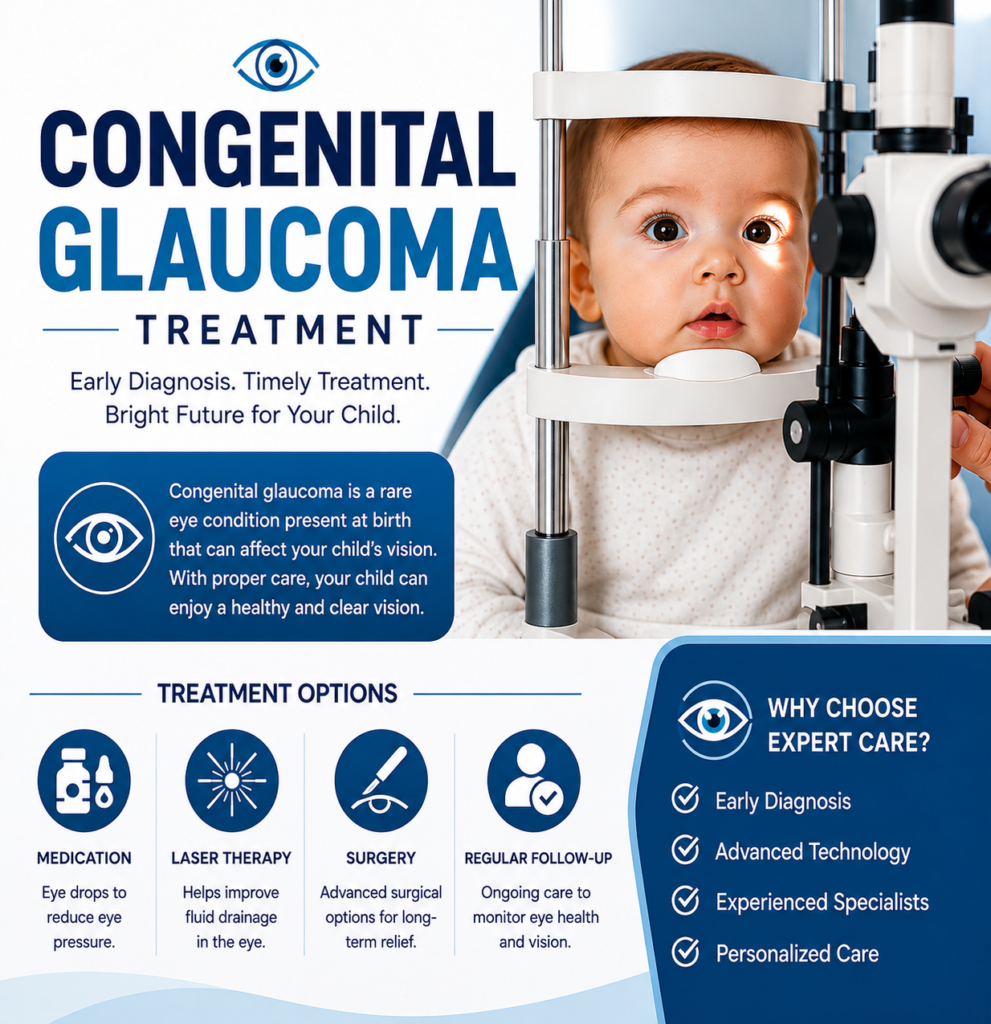
For many patients, glaucoma eye drops are the first-line treatment for controlling elevated eye pressure. These medicines work in different ways to reduce fluid production or improve fluid drainage from the eye.
Regular use is important because missing prescribed doses may allow eye pressure to rise. Therefore, patients should use their medication exactly as directed by their ophthalmologist and attend scheduled follow-up appointments.
Laser treatment can help lower eye pressure by improving the drainage of fluid from the eye. Trabeculoplasty is one laser procedure used for certain types of open-angle glaucoma.
If medicines or laser treatment do not provide sufficient control, glaucoma surgery may be recommended. The appropriate procedure depends on the type of glaucoma, its severity, optic nerve condition, and the patient’s individual needs.
A trabeculectomy creates an alternative pathway that allows fluid to drain from the eye. Glaucoma drainage devices can be considered in advanced or complicated cases. Selected patients with mild to moderate glaucoma may also be suitable candidates for minimally invasive glaucoma surgery (MIGS).
A complete glaucoma evaluation helps determine whether surgery is appropriate. Follow-up examinations after the procedure are important for monitoring eye pressure, optic nerve health, and disease progression.
Glaucoma is a lifelong condition, and the disease can sometimes progress even when eye pressure is being treated. Therefore, regular follow-up appointments are essential for monitoring your condition and protecting the remaining vision.
During follow-up visits, your ophthalmologist may:
Consistent follow-up is particularly important because glaucoma can progress silently without causing noticeable changes in vision.

For patients in search of trusted and progressive glaucoma evaluation and care, Klarity
Eye Care Hospital provides complete glaucoma diagnosis, medical therapy, laser therapy and
surgical treatment under the guidance of an expert specialist
Visit Klarity Eye Care Hospital